Al-Aqeedah at-Tahawiyyah by Imam Abu Ja‘far at-Tahawi (d. 321 AH) is one of the most widely accepted statements of the creed of Ahl us Sunnah wal Jama‘ah. Dars e Aqeedah at-Tahawi is a 519-page Urdu explanation of this text, based on the lessons of Hazrat Maulana Shah Mufti Mohammed Nawal ur Rahman Sahab and compiled by Mufti Muhammad Raza ur Rahman Abid Qasmi and Mufti Muhammad Ata ur Rahman Sajid Qasmi.
The book explains, point by point, what a Muslim must believe about Allah: His oneness, His eternal attributes, His power, knowledge, will and provision, and why He is free of every likeness to creation. It explains taqdeer, guidance and misguidance, and answers the questions raised by philosophers and by sects such as the Mu‘tazila, with proofs from the Qur’an, the Sunnah and sound reason.
Written for students of the deen and for educated readers alike, it is an excellent way to make one’s aqeedah firm and clear in an age of doubts.
What you will find inside
Allah as the Provider and the Giver of death
The eternity of Allah’s attributes
Belief in resurrection; aqeedah vs philosophy
Allah’s power, knowledge and will
Allah’s freedom from any likeness to creation
The belief in taqdeer
Guidance and misguidance; the view of Ahl us Sunnah and the Mu‘tazila
Answers to common objections
Read online
This is a large book (521 pages, 77.8 MB). Tap Read online to open it in your browser’s PDF reader, or download it over Wi-Fi to read offline.
Frequently asked questions
What is Aqeedah at-Tahawiyyah?
It is the classical statement of Sunni creed by Imam Abu Ja‘far at-Tahawi, accepted by scholars of all four madhhabs. This book explains it in detail in Urdu.
Why is the PDF file large?
The book has 519 pages of high-quality scans, so the file is large. Use “Read Online” to read in the browser, or download it over Wi-Fi.
Published by Shariah Board of India. With thanks to the Shariah Board, where this book was first published online.
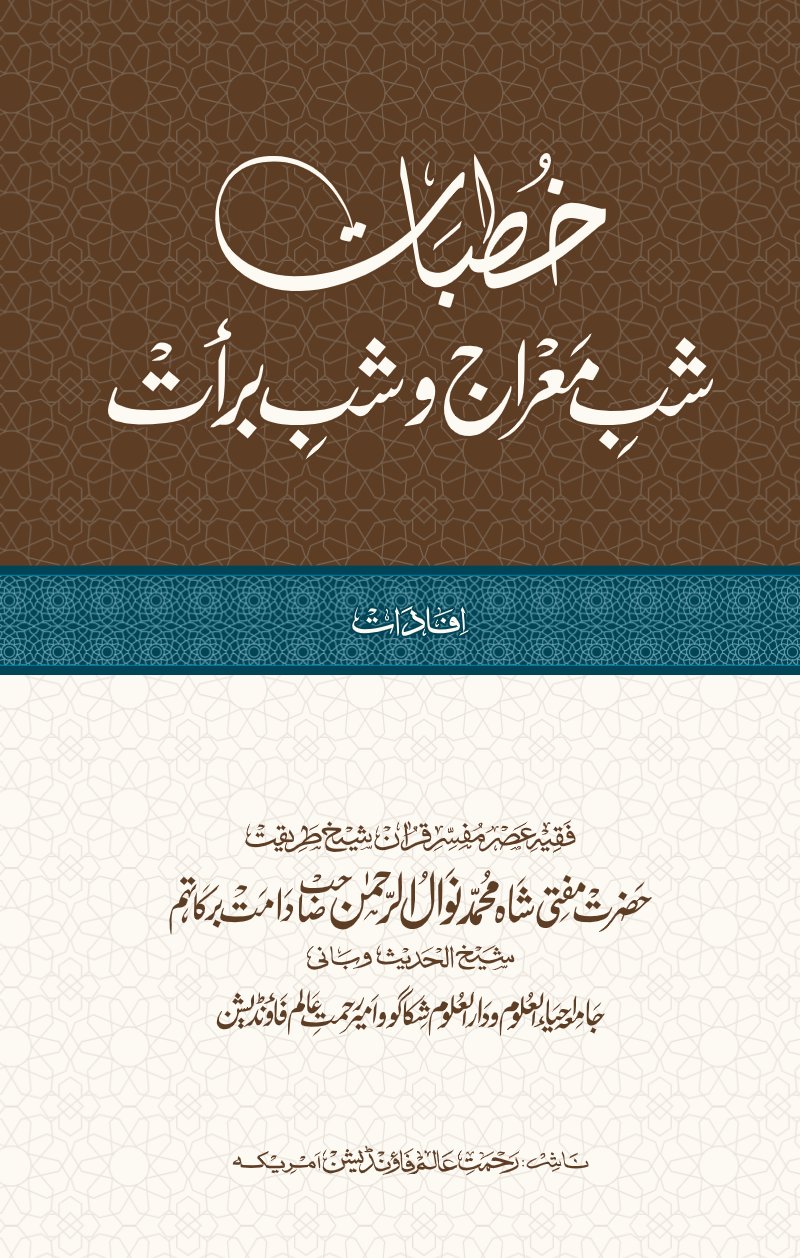
Khutbat e Shab e Me‘raj o Shab e Bara’at brings together the khutbat of Hazrat Maulana Shah Mufti Mohammed Nawal ur Rahman Sahab on two blessed occasions in the Islamic calendar, compiled by Mufti Muhammad Ata ur Rahman Sajid Qasmi.
The first part explains the Isra and Mi‘raj: whether the journey was physical or spiritual, the Mi‘raj in the light of time and space, the two centres of spirituality, and the special gifts given to the Prophet ﷺ. It then describes the scenes shown to him on that night: the fate of those who devour the wealth of orphans, abandon salah, backbite, carry tales, withhold zakat or turn people away from the truth. Each scene becomes a lesson for our lives today.
The second part discusses the night of the 15th of Sha‘ban (Shab e Bara’at), the reported virtues of the night, how to spend it in tauba and du‘a, and which customs have no basis and should be avoided.
What you will find inside
Was the Mi‘raj physical or spiritual?
The Mi‘raj in the light of time and space
The special gifts given to the Prophet ﷺ
The scenes shown on the night of Mi‘raj
The punishment for neglecting salah and withholding zakat
The fate of backbiters, tale-carriers and those who devour orphans’ wealth
The night of the 15th of Sha‘ban
How to spend Shab e Bara’at, and customs to avoid
Read online
If the book does not appear above (on some phones), tap Read online or download the PDF.
Frequently asked questions
Was the Mi‘raj physical or spiritual?
The book explains the view of Ahl us Sunnah that the Prophet ﷺ was taken in body and soul, and discusses the evidence in detail.
Does the book cover Shab e Barat?
Yes, the second part discusses the night of the 15th of Sha‘ban, its worship and the customs to avoid.
Published by Shariah Board of America · Rahmat-e-Alam Foundation. With thanks to the Shariah Board, where this book was first published online.
A shajra is the spiritual chain that links a seeker, through his shaykh, back to the Prophet ﷺ. Shajra Salasil e Arba presents the chains of the four great Sufi orders, Qadriya, Chishtiya, Naqshbandiya and Suhrawardiya, as held by Hazrat Maulana Shah Mufti Mohammed Nawal ur Rahman Sahab, Khalifa and Mujaz of Hazrat Shah Sufi Ghulam Mohammed Sahab (RA) and Hazrat Dr. Tanveer Ahmad Khan Sahab.
Along with the shajrahs, the booklet gives essential guidance and teachings for saalikeen, those who have taken bai‘ah: the daily ma‘mulat, the etiquette of zikr, the importance of following the Shariah and the Sunnah, and the adab of the relationship with the shaykh. It carries a foreword by Mufassir e Quran Hazrat Maulana Shah Mohammed Kamal ur Rahman Sahab (RA).
It is a compact companion for every mureed of the Silsila and for anyone who wants to understand the chains of guidance through which the teachings of tasawwuf have reached us.
What you will find inside
The meaning and purpose of a shajra
The Qadri chain
The Chishti chain
The Naqshbandi chain
The Suhrawardi chain
Essential guidance for saalikeen
Daily ma‘mulat and the etiquette of zikr
Foreword by Hazrat Shah Kamal ur Rahman Sahab (RA)
Read online
If the book does not appear above (on some phones), tap Read online or download the PDF.
Frequently asked questions
What does “Salasil e Arba” mean?
It means “the four chains”: the Qadri, Chishti, Naqshbandi and Suhrawardi orders of tasawwuf.
Who should read this shajra?
Every mureed of the Silsila and anyone who wants to understand the chains of guidance and the basic practices of the path.
Published by Rahmat-e-Alam Foundation, America. With thanks to the Shariah Board, where this book was first published online.
The second volume of Tazkeerat e Juma continues the Friday reminders of Hazrat Maulana Shah Mufti Mohammed Nawal ur Rahman Sahab, with a strong focus on aqeedah: the beliefs every Muslim must hold firmly.
It explains tawheed in depth, including tawheed af‘ali (seeing Allah as the doer of all), the difference between creation and acquisition, and how to keep Allah present in the heart (istihzar). It then turns to the aqeedah of risalat and its demands: belief in all the Prophets, their number and ranks, the virtues of the Prophet ﷺ and the balance needed when speaking about them.
A major section is devoted to Khatm e Nubuwwat, the finality of prophethood: the Prophet’s ﷺ prophecies about false claimants, the stories of those claimants, and the steadfastness of the Sahaba and the ummah in protecting this belief. It is an essential resource for khateebs and for families who want to protect the iman of the next generation.
What you will find inside
Tawheed af‘ali and the difference between creation and acquisition
Keeping Allah present in the heart (istihzar)
The aqeedah of risalat and its demands
Belief in all the Prophets and their ranks
Balance in speaking about the virtues of the Prophets
The aqeedah of Khatm e Nubuwwat
Prophecies about false claimants to prophethood
The steadfastness of the ummah in protecting this belief
Read online
If the book does not appear above (on some phones), tap Read online or download the PDF.
Frequently asked questions
How is Volume 2 different from Volume 1?
Volume 1 focuses on the Juma khutba itself, justice, ihsan and Eid; Volume 2 focuses on aqeedah: tawheed, risalat and the finality of prophethood.
Is Tazkeerat e Juma Vol 2 available as a free PDF?
Yes. You can read it online or download it free from this page.
Published by Rahmat-e-Alam Foundation, Chicago. With thanks to the Shariah Board, where this book was first published online.
Tazkeerat e Juma is a collection of the Friday reminders of Hazrat Maulana Shah Mufti Mohammed Nawal ur Rahman Sahab, described on its cover as a fine collection of scholarly treasures, decisive proofs and rare khutbat, equally useful for ulama, khateebs and the general public.
Volume 1 opens with the tafseer of the second ruku of Surah Al-Jumu‘ah and clears common misunderstandings about Juma salah and the khutba. It summarises the meaning of the Arabic khutbas of Friday and explains why the Khulafa e Rashideen are mentioned in them.
It then takes the famous verse recited in every khutba, “Indeed, Allah commands justice and good conduct and giving to relatives, and forbids immorality, wrongdoing and oppression”, and explains each part: the demands of justice, what ihsan is, the rights of relatives, and staying away from indecency. It ends with the message of Eid, the etiquette and rulings of Juma and the two Eids, and the Arabic khutbas of Juma and the Eids, making it a ready reference for every imam.
What you will find inside
Tafseer of the second ruku of Surah Al-Jumu‘ah
Common misunderstandings about Juma and the khutba
Summary of the Arabic khutbas of Friday
Why the Khulafa e Rashideen are mentioned in the khutba
The demands of justice (adl)
What is ihsan?
Rights of relatives; avoiding indecency and evil
The message of Eid; etiquette and rulings of Juma and the Eids
Arabic khutbas of Juma and the Eids
Read online
If the book does not appear above (on some phones), tap Read online or download the PDF.
Frequently asked questions
Who is Tazkeerat e Juma for?
It is written for ulama, khateebs and the general public: imams can use it to prepare the Juma bayan, and every Muslim can read it as a weekly reminder.
Does it include the Arabic khutbas?
Yes. Volume 1 includes the Arabic khutbas of Juma and the two Eids, along with their meaning.
Published by Rahmat-e-Alam Foundation, Chicago. With thanks to the Shariah Board, where this book was first published online.
Surah Ar-Rahman is known as the ‘Arus ul Quran, the adornment of the Qur’an. Its refrain, “Which of the favours of your Lord would you deny?”, calls both jinn and mankind to gratitude. This 205-page Urdu book is the thematic dars of Hazrat Maulana Shah Mufti Mohammed Nawal ur Rahman Sahab on this beloved surah.
It begins with the background of the surah: the number of its verses, words and letters, its central theme and its link with the previous surah, whether it is Makki or Madani, and the circumstances of its revelation. It then explains the meaning of Ar-Rahman, the difference between Ar-Rahman and Ar-Raheem, and why the whole of creation is an effect of Allah’s mercy.
The tafseer reflects on each blessing the surah mentions: the teaching of the Qur’an, the creation of man and his power of expression, the balance in the universe, the seas and the ships, the passing away of everything except the Face of Allah, and the two gardens promised to those who fear standing before their Lord.
What you will find inside
Verses, words and letters of Surah Ar-Rahman
Its central theme and link with the previous surah
Is Surah Ar-Rahman Makki or Madani?
The circumstances of its revelation
The meaning of Ar-Rahman, and Ar-Rahman vs Ar-Raheem
Creation as the effect of Allah’s mercy
Why Allah mentions His blessings
Teaching the Qur’an as pure mercy
Read online
If the book does not appear above (on some phones), tap Read online or download the PDF.
Frequently asked questions
Why is Surah Rahman called the bride of the Qur’an?
It is known as ‘Arus ul Quran because of its beauty and its repeated reminder of Allah’s favours. The book explains this and the background of the surah.
Is this Surah Rahman tafseer in Urdu free?
Yes. The complete PDF can be read online or downloaded free from this page.
Published by Shariah Board of America · Rahmat-e-Alam Foundation, Chicago. With thanks to the Shariah Board, where this book was first published online.
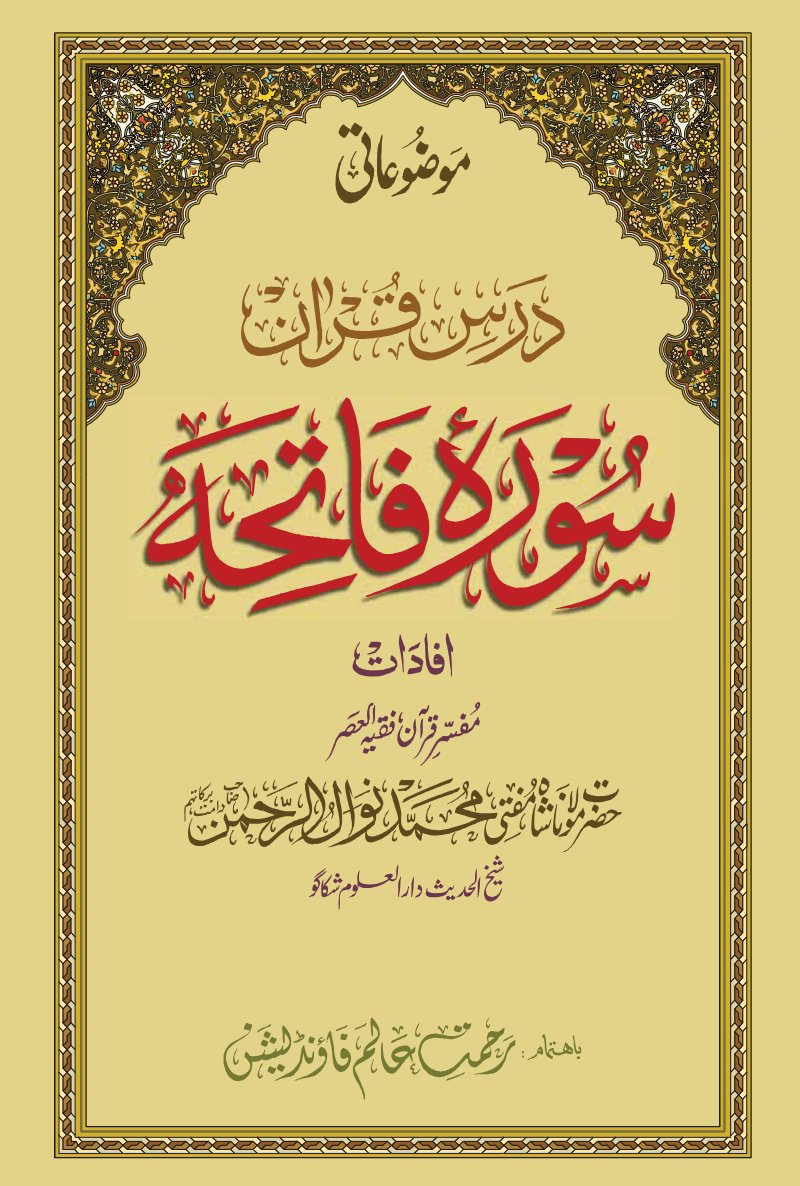
Surah Al-Fatiha is the opening of the Qur’an and the heart of every rak‘ah of salah. This 318-page Urdu book, Mauzuati Dars e Quran – Surah Fatiha, presents the thematic dars of Hazrat Maulana Shah Mufti Mohammed Nawal ur Rahman Sahab on this great surah.
Before the tafseer itself, the book gives a valuable introduction to Uloom ul Quran: what wahy (revelation) is and why mankind needs it, the sources of knowledge, the ways revelation came to the Prophet ﷺ, the belief of Ahl us Sunnah about the Kalam of Allah, the history of the revelation of the Qur’an, Makki and Madani surahs, the wisdom of gradual revelation and asbab un nuzul.
It then explains each verse of Al-Fatiha: praise of Allah, His lordship of the worlds, His mercy, the Day of Recompense, worship and seeking help from Allah alone, and the du‘a for the straight path. It is an excellent book for anyone who wants their salah to come alive with understanding.
What you will find inside
What wahy (revelation) is and why we need it
Sources of knowledge and their limits
How revelation came to the Prophet ﷺ
The belief of Ahl us Sunnah about the Kalam of Allah
History of the revelation of the Qur’an
Makki and Madani surahs
The wisdom of gradual revelation
Verse-by-verse tafseer of Surah Al-Fatiha
Read online
If the book does not appear above (on some phones), tap Read online or download the PDF.
Frequently asked questions
What is in this Surah Fatiha tafseer?
An introduction to wahy and Uloom ul Quran, followed by a detailed thematic explanation of every verse of Surah Al-Fatiha in Urdu.
Can I download the Surah Fatiha tafseer PDF?
Yes, the full PDF is free to read online or download from this page.
Published by Shariah Board of America · Rahmat-e-Alam Foundation, Chicago. With thanks to the Shariah Board, where this book was first published online.
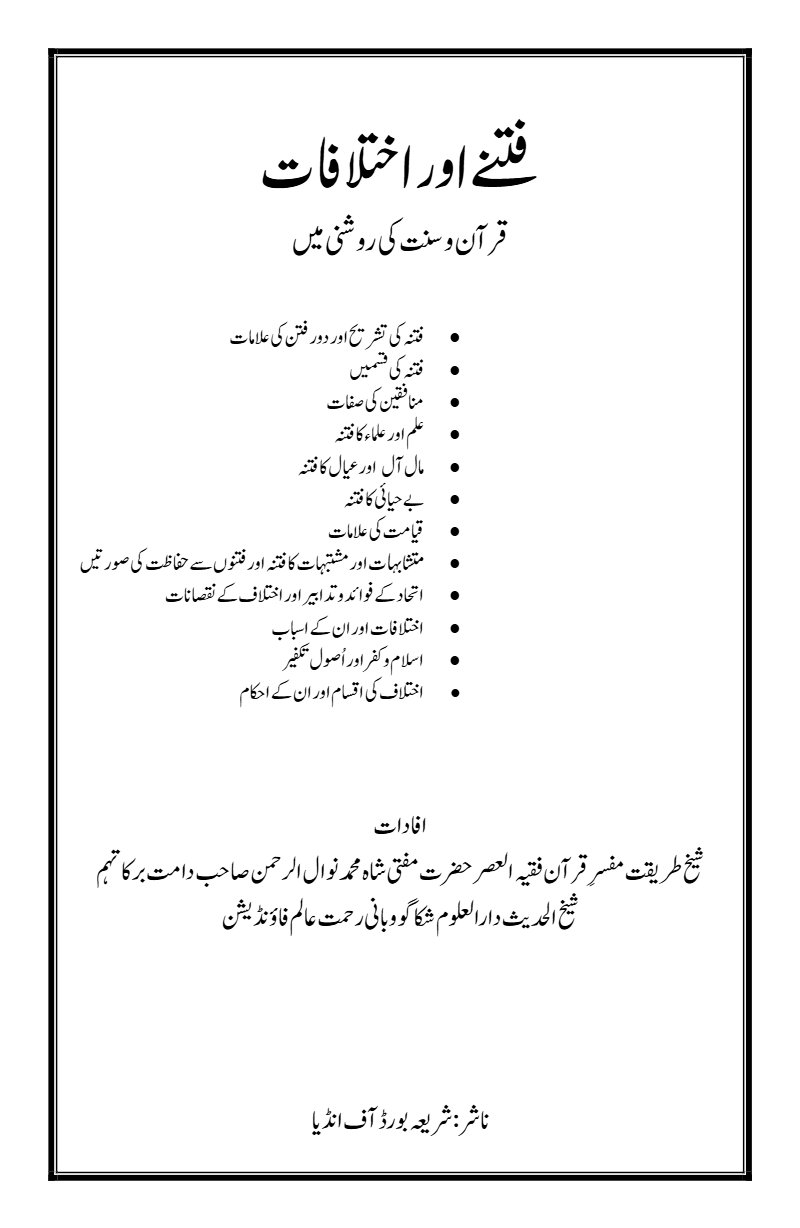
We live in an age of fitan, trials that test faith, and of ikhtilafat, disputes that divide families and communities. Fitne Aur Ikhtilafat – Quran o Sunnat Ki Roshni Mein is a 420-page Urdu work from the teachings of Hazrat Maulana Shah Mufti Mohammed Nawal ur Rahman Sahab that explains what the Qur’an and the ahadith say about both.
The first part explains the meaning of fitnah, its kinds and the signs of the times of trial foretold by the Prophet ﷺ: the fitnah of wealth, of women, of hypocrisy, of Dajjal and the major and minor signs of the Hour. It describes the qualities of the munafiqeen so that a believer can guard against them in himself.
The second part turns to disagreement: why ikhtilaf arises, which differences are acceptable and which are destructive, the principles of Islam for handling disputes, and the way to protect oneself and one’s family from fitan through iman, knowledge, patience and the company of the righteous.
What you will find inside
The meaning and kinds of fitnah
Signs of the times of fitan foretold in the ahadith
The qualities of the hypocrites (munafiqeen)
The fitnah of wealth, women and children
The fitnah of Dajjal and the signs of Qiyamah
How to protect yourself and your family from fitan
Causes and consequences of ikhtilaf
The principles of Islam for handling disagreement
Read online
If the book does not appear above (on some phones), tap Read online or download the PDF.
Frequently asked questions
What does “Fitne Aur Ikhtilafat” mean?
It means “Trials and Disagreements”. The book explains the trials (fitan) of the last times and the right way to deal with disputes, in the light of the Qur’an and Sunnah.
How can I protect myself from fitnah?
The book points to firm iman, knowledge of the deen, patience, du‘a, the company of the righteous and holding to the Qur’an and Sunnah.
Published by Shariah Board of India. With thanks to the Shariah Board, where this book was first published online.
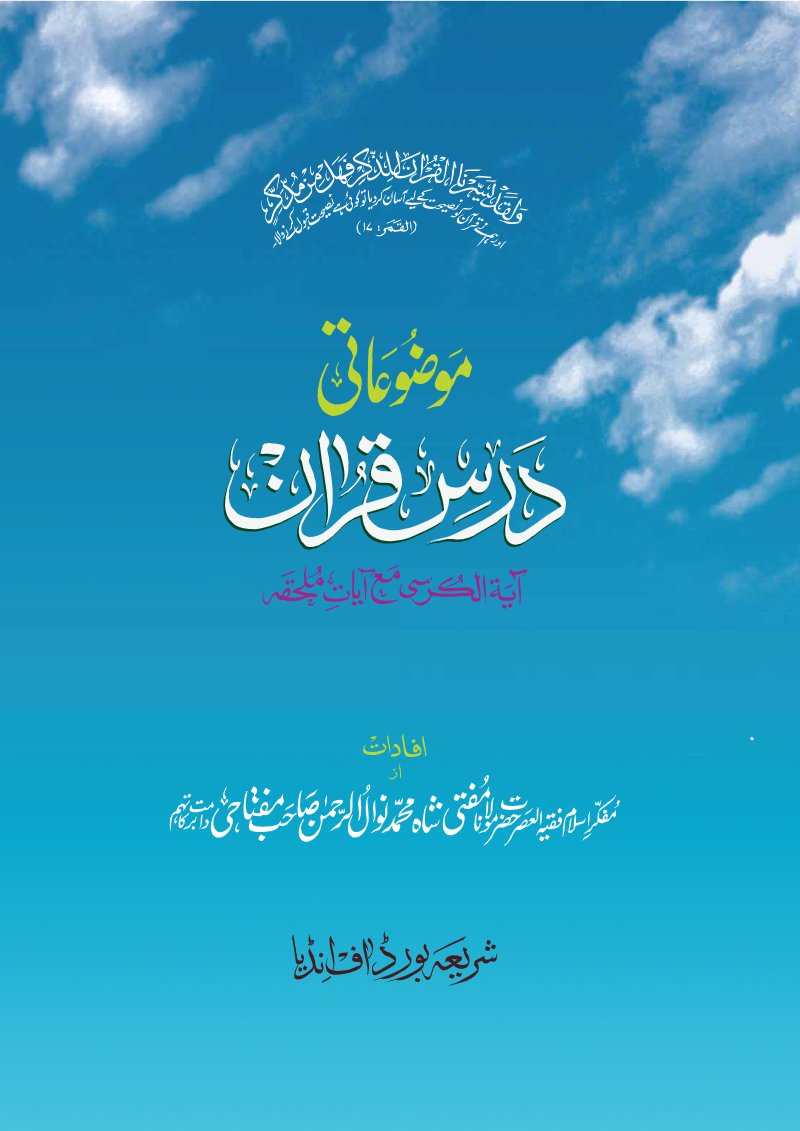
The Prophet ﷺ called Ayat ul Kursi the greatest verse of the Book of Allah. This book, Mauzuati Dars e Quran – Ayat ul Kursi, is a detailed thematic tafseer of the verse in Urdu, drawn from the dars of Hazrat Maulana Shah Mufti Mohammed Nawal ur Rahman Sahab, Shaykh ul Hadith of Darul Uloom Chicago.
Phrase by phrase, it explains what Ayat ul Kursi teaches about the oneness of Allah, His being Al-Hayy and Al-Qayyum, His perfect knowledge, His ownership of the heavens and the earth, and the reality of intercession on the Day of Judgement. Along the way it explains why Allah is free of drowsiness and sleep, and what the majesty of Allah described in this verse means for the believer.
Written in clear Urdu for ordinary readers, students and imams alike, it is ideal for anyone who recites Ayat ul Kursi daily and wants to understand its meaning and live by it.
What you will find inside
The purpose of the creation of man
Who alone is worthy of worship
Allah’s attribute of Qayyumiyyah (sustaining all things)
The Ism e Azam (the greatest Name of Allah)
The effect of Allah’s majesty on the angels
Why Allah is free of drowsiness and sleep
The owner of the heavens and the earth
The reality and purpose of shafa‘ah (intercession)
The majesty of Allah and its effect on the Prophets
The distinction of the ummah of Muhammad ﷺ
Read online
If the book does not appear above (on some phones), tap Read online or download the PDF.
Frequently asked questions
What is this book about?
It is a detailed Urdu tafseer of Ayat ul Kursi (Surah Al-Baqarah 2:255) and related verses, explaining tawheed, Allah’s attributes, His Kursi and the reality of intercession.
Is the Ayat ul Kursi tafseer PDF free?
Yes. You can read it online or download the full PDF free of charge from this page.
Published by Shariah Board of America · Rahmat-e-Alam Foundation, Chicago. With thanks to the Shariah Board, where this book was first published online.










Oct 18 2026
Dars e Aqeedah at-Tahawiyyah – Aqeedah Ahle Sunnat Wal Jamaat in Urdu (PDF)
Dars e Aqeedah at-Tahawiyyah
About this book
Al-Aqeedah at-Tahawiyyah by Imam Abu Ja‘far at-Tahawi (d. 321 AH) is one of the most widely accepted statements of the creed of Ahl us Sunnah wal Jama‘ah. Dars e Aqeedah at-Tahawi is a 519-page Urdu explanation of this text, based on the lessons of Hazrat Maulana Shah Mufti Mohammed Nawal ur Rahman Sahab and compiled by Mufti Muhammad Raza ur Rahman Abid Qasmi and Mufti Muhammad Ata ur Rahman Sajid Qasmi.
The book explains, point by point, what a Muslim must believe about Allah: His oneness, His eternal attributes, His power, knowledge, will and provision, and why He is free of every likeness to creation. It explains taqdeer, guidance and misguidance, and answers the questions raised by philosophers and by sects such as the Mu‘tazila, with proofs from the Qur’an, the Sunnah and sound reason.
Written for students of the deen and for educated readers alike, it is an excellent way to make one’s aqeedah firm and clear in an age of doubts.
What you will find inside
Read online
Frequently asked questions
What is Aqeedah at-Tahawiyyah?
Why is the PDF file large?
More books by Mufti Nawal ur Rahman Sahab
By silsilaekamaliya • Books - Mufti Nawal ur Rahman Sahab, Islamic Urdu Books – Silsila e Kamaliya • Tags: Ahle Sunnat Wal Jamaat, Aqeedah, Aqeedah Tahawiyyah, free islamic books, Imam Tahawi, Islamic Creed, Mufti Nawal ur Rahman, Silsila e Kamaliya, Urdu Books PDF, Urdu Islamic Books PDF