Allah has the most beautiful names, so call upon Him by them (Al-A‘raf 7:180). This collection explains each of the 99 Names of Allah (Asma ul Husna): its Arabic, its meaning, and the spiritual treatment (wazifa) taught by Hazrat Shah Abdur Raheem Sahab Dard (RA).
Each page gives the correct pronunciation (Ya Latif, Ya Razzaq, Ya Haqq…), the abjad value, how to recite it and for what need, together with bayanaat on the Names by Maulana Fazlur Rahman Mahmood Sahab.
اللہ تعالیٰ کے ننانوے نام (اسماءِ حسنیٰ): ہر نام کا معنی، فوائد، وظیفہ اور پڑھنے کا طریقہ۔
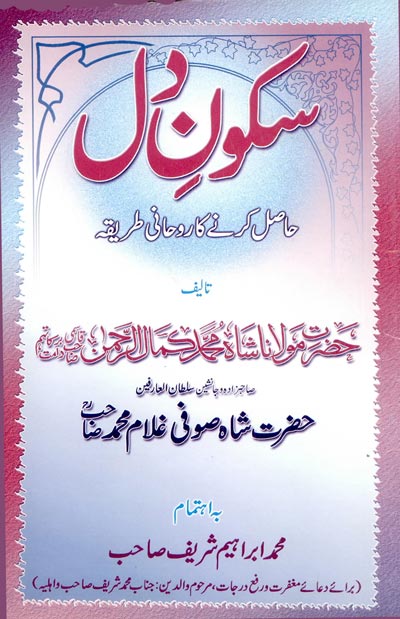
From the teachings of Hazrat Maulana Shah Abdur Raheem Sahab Dard (Rahmatullah Alaih)
Meaning
Al-Hakam means the Judge, the Arbiter: the One whose judgement is final and perfectly just, and which no one can overturn.
Understanding the Name
Allah judges between His servants in this world through His law and His decree, and in the Hereafter He will judge every dispute with complete fairness. The Prophet ﷺ asked in the Qur’an: “Shall I seek a judge other than Allah, when it is He who has sent down to you the Book explained in detail?” (Al-An‘am 6:114).
Accepting Allah as the Judge means accepting His commands willingly, even when they go against our desires, and trusting that His decision is always best.
Effects and reflections
The effect of this beautiful Name on a servant of Allah should be that he accepts Allah as the only supreme Judge and lives according to Iman-e-Mujmal (the summary declaration of faith).
One who has true knowledge realises that it calls him to good deeds. Those who are involved in sins in fact damage both sides of their life, the practical and the spiritual. Before deciding on any matter, one should consider carefully whether it is desirable or undesirable, because good deeds lead to salvation.
Treatment (Amal)
Whoever recites “Yā Ḥakam” many times on the night of Friday will find his heart filled with inspiration and spiritual insight.
Whoever recites it 89 times after every prayer will, by Allah’s will, have many secrets revealed to him.
Recite
Yā Ḥakam, 89 times
When
After every prayer; and abundantly on Friday night
From the teachings of Hazrat Maulana Shah Abdur Raheem Sahab Dard (Rahmatullah Alaih)
Meaning
Al-Baseer means the All-Seeing: the One who sees everything, open and hidden, near and far, at every moment.
Understanding the Name
Nothing escapes the sight of Al-Baseer: the smallest movement in the darkest night, and the intentions hidden in the heart. In the famous Hadith of Jibreel, the Prophet ﷺ described ihsan as “to worship Allah as though you see Him, for even if you do not see Him, He sees you.” This Name is the foundation of ihsan.
A person who lives with the awareness that Allah is watching becomes sincere in private and in public, and finds it easier to give up sins.
Effects and reflections
Whatever is looked at is affected by the one who looks at it, and the strength of the effect depends on the one looking. It is said that when a tiger hunts on a dark night its eyes seem to shine, and whatever prey it fixes its gaze upon becomes motionless.
Allah watches every act of His creatures, yet the ignorant person does whatever he likes. It is narrated that when a servant commits a forbidden act behind closed doors, fearing only people like himself while ignoring the All-Seeing Lord, Allah says: “You fear people like yourself, yet you feel no shame before Me, though I am in front of you.” One should improve his character out of awe of the All-Seeing Allah.
Treatment (Amal)
By reciting “Yā Baṣīr” 313 times after every Jumu‘ah prayer, one will, by Allah’s will, excel in judgement and be gifted with farsightedness.
From the teachings of Hazrat Maulana Shah Abdur Raheem Sahab Dard (Rahmatullah Alaih)
Meaning
As-Sami means the All-Hearing: the One who hears everything, every voice, every whisper and every unspoken prayer of the heart.
Understanding the Name
Allah’s hearing is not limited by distance, noise or language. He hears thousands of people calling Him at the same moment without any confusion. The Qur’an says: “There is nothing like Him, and He is the All-Hearing, the All-Seeing” (Ash-Shura 42:11). In every prayer we say: Sami‘allahu liman hamidah, “Allah hears the one who praises Him.”
Knowing that Allah hears us gives hope in dua, and it also teaches us to guard our tongue, because every word is heard.
Effects and reflections
Allah hears everything. He has shown this miracle in the fact that His creatures also possess hearing. He alone hears the plea of every person at every time.
Every person should be careful before saying anything, and should remember that his words are heard by the All-Hearing, even before they are spoken. Whether we speak to someone of low or high status, Allah knows the intention behind the words, including any fraud or deceit. Allah hears even a black ant crawling on a black stone on a dark night.
Treatment (Amal)
Whoever recites “Yā Samī‘” 191 times after every prayer will have his prayers (duas) accepted.
Whoever recites it after the sunnah of Fajr will, Insha’Allah, receive the special attention of Allah.
From the teachings of Hazrat Maulana Shah Abdur Raheem Sahab Dard (Rahmatullah Alaih)
Meaning
Al-Mudhill means the Humiliator, the One who brings low: He disgraces those who deserve it because of their wrongdoing.
Understanding the Name
This Name is always understood with its pair, Al-Muizz (Al ‘Imran 3:26). Allah never humiliates anyone unjustly; disgrace comes as the result of a person’s own arrogance, oppression and sins. Pharaoh, Qarun and other tyrants of history were brought low by Al-Mudhill after they refused to humble themselves.
For the oppressed this Name is a source of hope, and for everyone it is a warning to stay away from injustice and pride.
Effects and reflections
Allah disgraces the one who, because of his bad deeds, deserves it; the degree of disgrace depends on the degree of wrongdoing.
The effect of this beautiful Name invites a person towards good deeds and stops him from committing sins. Whoever does not realise this becomes its victim.
Treatment (Amal)
To protect oneself from jealousy, tyranny and enmity, recite “Yā Mudhill” 128 times after every prayer and pray to Allah for His protection. If the one reciting is truly being wronged, Insha’Allah he will see the effect of this recitation.
If an oppressor himself recites this Name, he will only be harmed by it.
From the teachings of Hazrat Maulana Shah Abdur Raheem Sahab Dard (Rahmatullah Alaih)
Meaning
Al-Muizz means the Giver of Honour: the One who grants honour, dignity and strength to whomever He wills.
Understanding the Name
Allah says: “Say, O Allah, Owner of all sovereignty, You give sovereignty to whom You will and take it away from whom You will; You honour whom You will and humble whom You will. In Your hand is all good” (Al ‘Imran 3:26). Al-Muizz and Al-Mudhill are mentioned together for this reason.
Honour that comes from Allah lasts; honour sought from people fades. The believer seeks dignity through obedience to Al-Muizz, not through flattering the powerful.
Effects and reflections
Allah is the Giver of honour. Whoever realises this can find, by Allah’s will, many opportunities to gain respect; he himself is blessed and becomes a means of blessing for others.
But if a person ignores Allah and gives the credit for honour, wealth, comfort and peace to other causes, he falls into shirk and leads others into it as well, and so becomes a mushrik. May Allah protect us. Ameen.
Treatment (Amal)
Whoever recites “Yā Mu‘izz” 781 times after the Maghrib prayer on Monday or Thursday will, Insha’Allah, be blessed with honour and dignity.
From the teachings of Hazrat Maulana Shah Abdur Raheem Sahab Dard (Rahmatullah Alaih)
Meaning
Ar-Raafi means the Exalter: the One who raises up and elevates whomever He wills in rank, honour and nearness to Him.
Understanding the Name
Ar-Raafi raises the believers by their faith, knowledge and good deeds. Allah says: “Allah will raise those who have believed among you and those who were given knowledge, by degrees” (Al-Mujadilah 58:11). The Prophet ﷺ taught that whoever humbles himself for the sake of Allah, Allah will raise him.
True elevation is not about position in this world; it is a higher rank in the sight of Allah. Remembering this Name inspires the believer to rise above sins and petty desires.
Effects and reflections
The effect of this beautiful Name opens countless doors of Allah’s favour for His servant. Through it a person rises from lower to higher ranks, and gains lawful (halal) provision and a good position.
A person who realises that Allah has shown him the path to a higher rank in the Hereafter, whose heart is content and longs to rise higher, stays away from all sins and vices and develops the spirit of pleasing others.
Treatment (Amal)
Whoever recites “Yā Rāfi‘” 362 times in the second half of the 14th night of every (lunar) month will, Insha’Allah, become independent and well-off.
From the teachings of Hazrat Maulana Shah Abdur Raheem Sahab Dard (Rahmatullah Alaih)
Meaning
Al-Khaafidh means the Abaser, the One who lowers: He brings down the arrogant and the oppressors, and lowers whomever He wills according to His justice.
Understanding the Name
The root kh-f-ḍ means to lower. This Name is paired with Ar-Raafi (the Exalter). The Qur’an describes the Day of Judgement as an event “bringing down, raising up” (Al-Waqi‘ah 56:3): on that Day many who were high in this world will be lowered, and many who were humble will be raised.
Reflecting on Al-Khaafidh protects the believer from pride. Whatever position he has, he knows that Allah can lower him in a moment, so he stays humble and grateful.
Effects and reflections
Allah raises His creatures from a lower rank to a higher one, and because of their sins He may also lower them to nothing. A person who lives in luxury may be brought low because of his bad deeds, while a poor person may be saved from disgrace because of his good deeds.
Treatment (Amal)
Whoever recites “Yā Khāfiḍ” 1,493 times after every prayer will remain safe from difficulties.
By fasting for four days and reciting “Yā Khāfiḍ” after Maghrib on the fourth day, one will, by Allah’s will, succeed and remain safe from enemies.
From the teachings of Hazrat Maulana Shah Abdur Raheem Sahab Dard (Rahmatullah Alaih)
Meaning
Al-Baasit means the Expander, the Generous Giver: the One who expands provision and relieves difficulties.
Understanding the Name
The root b-s-ṭ means to spread out and open wide. Al-Baasit extends His hand of generosity, widens provision, opens hearts and brings ease after hardship. The Qur’an says: “Indeed, your Lord extends provision for whom He wills and restricts it” (Al-Isra’ 17:30).
When provision is plentiful, the believer remembers that abundance is also a test, and shows gratitude by spending in the way of Allah. When it is tight, he waits with hope for Al-Baasit to expand it.
Effects and reflections
The condition of all creatures is shaped by these two qualities of Allah, the Withholder and the Expander. Feeling the effect of the Expander is like the relationship between the lover and the Beloved.
We should be thankful to Allah through our words, our deeds and by spending our wealth (in charity). When provision is plentiful, that condition may itself be a test from Allah.
Treatment (Amal)
Recite “Yā Bāsiṭ” 83 times after every prayer; by Allah’s will, difficulties will be resolved. It is especially recommended to recite it every day after the fard and sunnah of Fajr.
From the teachings of Hazrat Maulana Shah Abdur Raheem Sahab Dard (Rahmatullah Alaih)
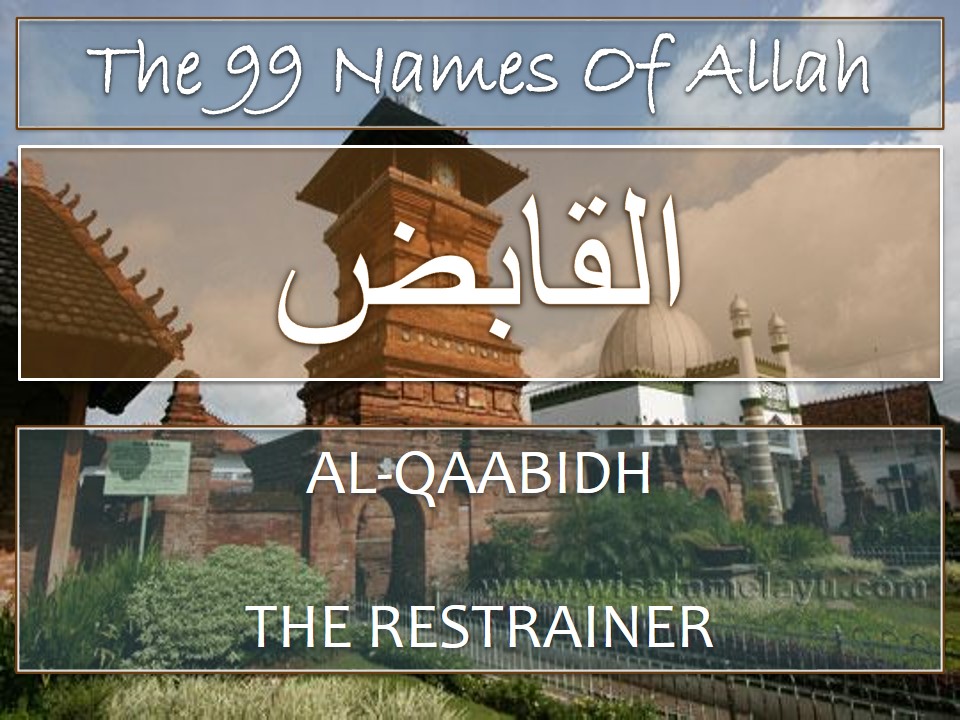
Meaning
Al-Qaabidh means the Withholder, the Constrictor: the One who holds back and restricts provision, hearts and lives according to His wisdom.
Understanding the Name
The root q-b-ḍ means to grasp or hold in the hand. Allah says: “Allah withholds and grants abundance, and to Him you will be returned” (Al-Baqarah 2:245). Al-Qaabidh is always understood together with its partner Name, Al-Baasit (the Expander). The scholars teach that the two should be mentioned together, because Allah’s withholding is never without purpose: He restricts in order to test, to purify, to protect from harm or to prepare for something better.
The Sufis speak of the states of qabd (contraction of the heart) and bast (expansion). A seeker who feels his heart tight and heavy should know that this too is from Allah, and should remain patient until Al-Baasit opens it again.
Effects and reflections
The servant of Allah should accept Allah as the One who withholds, and should submit his will to the will of Allah. To please Allah, one should live following the example of the Prophet ﷺ, so that his whole life becomes worship.
One should reflect on the punishment described in the Qur’an and fear Allah, do good deeds, prepare for the Hereafter, and lead a balanced, measured life.
Treatment (Amal)
Write “Yā Qābiḍ” on four pieces of bread and eat them every morning for 40 days. Insha’Allah, the person will be saved from hunger, thirst and injury.
From the teachings of Hazrat Maulana Shah Abdur Raheem Sahab Dard (Rahmatullah Alaih)
Meaning
Al-Aleem means the All-Knowing: the One who is aware of everything and whose knowledge is complete and without limit.
Understanding the Name
Allah’s knowledge covers the past, the present and the future, the seen and the unseen, what we say and what we hide in our hearts. “Not a leaf falls but that He knows it” (Al-An‘am 6:59). The Name appears more than a hundred and fifty times in the Qur’an, often joined with Al-Hakeem, the All-Wise.
For the believer this is a source of both comfort and awareness: comfort, because Allah knows his hidden struggles and good intentions; awareness, because nothing he does is hidden. It also teaches humility in seeking knowledge, as the angels said: “We have no knowledge except what You have taught us” (Al-Baqarah 2:32).
Effects and reflections
Allah possesses infinite knowledge, together with an everlasting life that has no end.
Treatment (Amal)
After the Chasht (Duha) prayer, recite “Yā ‘Alīm” 10 times with the hands raised towards the sky. Insha’Allah, this leads to wisdom and knowledge, and the person will become free from depending on others.





Jan 6 2015
Ya Hakam Meaning, Benefits & Wazifa – Al-Hakam (The Judge)
Al-Hakam
From the teachings of Hazrat Maulana Shah Abdur Raheem Sahab Dard (Rahmatullah Alaih)
Meaning
Al-Hakam means the Judge, the Arbiter: the One whose judgement is final and perfectly just, and which no one can overturn.
Understanding the Name
Allah judges between His servants in this world through His law and His decree, and in the Hereafter He will judge every dispute with complete fairness. The Prophet ﷺ asked in the Qur’an: “Shall I seek a judge other than Allah, when it is He who has sent down to you the Book explained in detail?” (Al-An‘am 6:114).
Accepting Allah as the Judge means accepting His commands willingly, even when they go against our desires, and trusting that His decision is always best.
Effects and reflections
The effect of this beautiful Name on a servant of Allah should be that he accepts Allah as the only supreme Judge and lives according to Iman-e-Mujmal (the summary declaration of faith).
One who has true knowledge realises that it calls him to good deeds. Those who are involved in sins in fact damage both sides of their life, the practical and the spiritual. Before deciding on any matter, one should consider carefully whether it is desirable or undesirable, because good deeds lead to salvation.
Treatment (Amal)
Whoever recites “Yā Ḥakam” many times on the night of Friday will find his heart filled with inspiration and spiritual insight.
Whoever recites it 89 times after every prayer will, by Allah’s will, have many secrets revealed to him.
By silsilaekamaliya • 99 Names of Allah – Meaning, Benefits & Wazifa • Tags: 99 Names of Allah, Ya-Hakam